
Overview
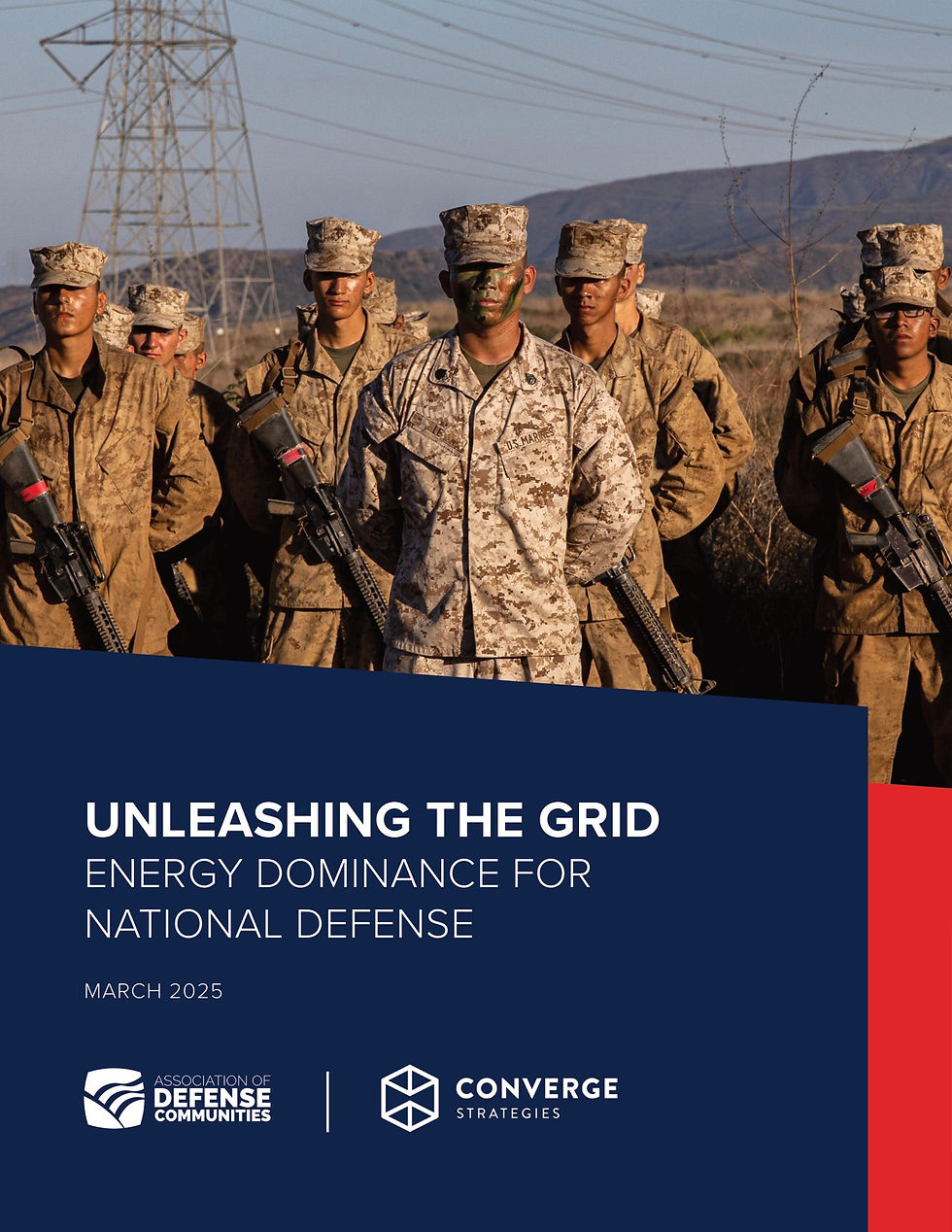
This report explores the connection between electric transmission, grid reliability and national defense. It frames the transmission system as critical infrastructure that supports military mission assurance, defense communities and the broader defense industrial base.
The report presents a framework for defense stakeholders to understand regional grid risk, assess opportunities for transmission expansion and engage more effectively in the policy and regulatory processes that shape electric infrastructure investment.
Why it matters
Reliable electricity is essential to national defense. Military installations, defense communities, domestic manufacturing, cyber operations, space-related missions and other critical defense functions depend heavily on the civilian electric grid. As electricity demand grows and the grid faces new reliability pressures, transmission planning becomes increasingly important to mission assurance.
The report highlights that regional outages can create serious risks for military preparedness because multiple installations and defense-related facilities may depend on the same bulk-power system assets. Strengthening transmission infrastructure can help improve resilience, supply diversity and energy assurance across broader regions.
Key challenges explored
The report examines several issues at the intersection of transmission planning and national defense, including:
The role of electricity in military mission assurance
Growing energy demand from cyber, space, AI and defense manufacturing
Competition for electricity supply from data centers and other large loads
The limits of relying only on “inside the fence line” resilience strategies
Regional grid reliability risks and their implications for defense readiness
The need to integrate defense priorities into transmission planning
The role of state, regional and federal regulatory processes in shaping transmission investment
Opportunities to support national defense through transmission expansion, resilience and infrastructure planning
Questions this resource helps answer
This resource helps defense, energy and policy stakeholders consider questions such as:
Why is transmission important to national defense?
How does grid reliability affect military mission assurance?
What role can defense stakeholders play in grid resilience planning?
How can DoD and defense communities engage beyond the fence line?
What should transmission planning for national defense aim to accomplish?
How can stakeholders assess regional transmission needs and grid risks?
Which regulatory and policy processes influence transmission expansion?
What the report covers
The report is structured around a series of practical questions for defense and energy stakeholders.
Key sections include:
Why transmission is important to national defense
How DoD can influence grid resilience
What transmission planning for national defense should accomplish
How defense stakeholders can assess transmission expansion needs
How electricity reliability, demand growth, extreme events and generation mix changes affect defense energy assurance
Regulatory processes and policy authorities that govern transmission planning
Conclusions and next steps for integrating defense priorities into grid planning
Who this resource is for
This report may be useful for:
Defense communities
Military installation stakeholders
Federal and state agencies
Defense industrial base organisations
Transmission planners
Utilities and grid operators
Energy policy stakeholders
Regulators and policymakers
Infrastructure and resilience planners